
The Shit Midlife Takes, But Also What it Hands Back Quietly
If midlife feels like pure loss, you're reading one column.

Everyone warned me midlife would be about loss.
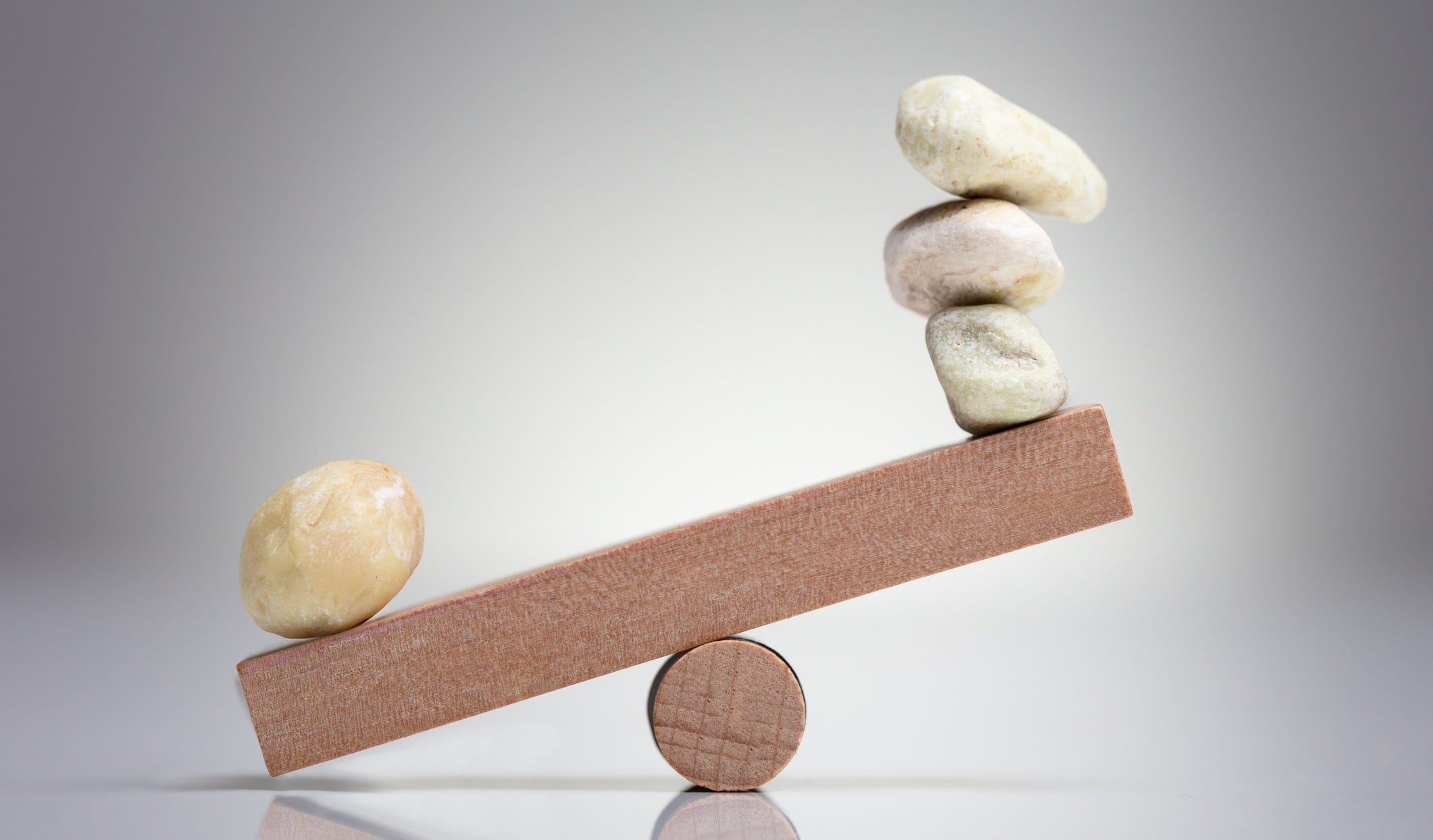
They were right. But they just kept a one-sided ledger.
They meant collagen, estrogen, the waist you had at 32, the relevance you’re supposedly shedding by the year. Our culture reads midlife like an obituary and stops there.
There’s a second column. Loss is loud, so it’s the only one anyone reads. The gains come in quiet, which is exactly why they go uncounted.
What actually leaves in midlife
What goes first isn’t your looks. It’s your tolerance. The patience for performing. Somewhere around 45 or 50, the “yes” you didn’t mean gets harder to say, until one day it just won’t come.
People read it as you pulling away. To you, it’s the first line in the column nobody counts.
Then the pruning starts. The people you kept out of habit. The dinners you hosted for people you didn’t like. The group texts you finally muted. The opinions you accepted so no one felt uncomfortable.
One by one, they fall off the list.
There’s research under this, and it names both columns. Stanford psychologist Laura Carstensen’s socioemotional selectivity theory shows that once people sense that time is getting shorter, they stop investing in roles and relationships that don’t nourish them and turn toward what carries meaning (Carstensen, 2006).
She found we keep fewer peripheral people as we age, and the ones who stay make our days feel better, not worse (English & Carstensen, 2014). Older adults report better emotional well-being than younger ones, not worse.
Subtraction and addition turn out to be the same finding, read from two sides.
The subtraction nobody prepares you for
I know the biggest subtraction of my life to this day, because I didn’t choose it.
My husband announced, out of nowhere, that he wasn’t happy and was leaving. We’d been married 18 years. From the outside, we looked like the happy couple, and I believed it too. A year later, I found out about the affair.
He never offered counseling. He never tried to fix it. He quit, moved on, and married her.
What followed wasn’t quiet. Screaming matches. Drama I didn’t start. Too many nights listening to my kids cry themselves to sleep, which is still too heart-wrenching to write about.
That was the biggest subtraction of my life, and I didn’t get a vote.
What the loss made room for
For a long time the only column I could see was everything gone. That’s where you have to let yourself stay a while. No addition cancels a subtraction like that, and I won’t pretend it does.
But the space didn’t stay empty. I finally moved into the work I’d always wanted and never let myself have: a career as a mental health therapist. I’d talked myself out of it for years over money and status, the two things that mattered a lot less once the floor had already fallen out. That was the first thing to fill the hole.
The rest came slower and surprised me more. I got happier. Not the performed kind. The kind where I wasn’t already handling the next crisis in my head.
And somewhere in there I became someone I’d actually choose. That’s a strange sentence to write about yourself for the first time at 50.
I didn’t add any of that on purpose. It arrived because the thing sitting on top of it was finally gone.
Midlife keeps two columns
This is what took me years to understand.
Some subtractions are your choice. Some get done to you, and no reframe makes those fair.
But the additions come either way, from the same place: the room that opens once you stop putting the old things back.
The grief is real, especially the kind you didn’t ask for. Mourn the marriage, the future you’d planned, and the woman who kept everything together. Mourn the version of you that looked fine on paper, because fine on paper is the loss nobody validates.
You hold both columns at once. Grief first, always, and the right one fills in on its own when you stop forcing it.
Starting over in that room is disorienting and possible at the same time. The blank page is terrifying, and it’s also the first one in years with no old rules on it.
She worked hard, and she got you here. Retiring her isn’t a betrayal. It’s how you finally see who took her spot.
One thing to try this week
Make the ledger yourself. Two columns. On the left, what midlife has taken, chosen or not.
On the right, what showed up in the space it left. The clarity you didn’t have at 35. The thing you finally said out loud in a room that had gone quiet.
If the right column looks thin, that’s not emptiness. You were never taught to count it.
The subtractions made all the noise. The additions came in quiet, and they’re the ones I’d fight to keep now.
Go read your own right column. It’s longer than you think.
If you've ever said yes and felt the resentment land a second later, that's the hangover. My new ebook goes after the habit at the root: how it got wired in, and how to start choosing on purpose. The People-Pleasing Hangover, $12.
The posts here stay free. If you want to go deeper, our community, Midlife Out Loud, gets you a monthly Around the Kitchen Table Zoom, quarterly Expert Lives, and every ebook I’ve made. Come sit with us.
Ellen Scherr is a psychotherapist who has spent decades sitting with women in midlife transition and rebuilt her own life at 50. She writes Life Branches for women 40+ navigating divorce, identity loss, and the specific grief of a body that’s changing without permission.
The losses are real and hurt like heck, but what takes the empty space is often so much better because we know ourselves better and we don’t have anyone to answer to anymore. Healthier relationships, work that feels more purposeful, more intentional days. There’s a reason why midlife is the beginning of the upward trend on happiness graphs.
Nailed it!