
Divorce at 50 Is Not Failure. It’s a Redesign.
You're allowed to build something that actually fits.

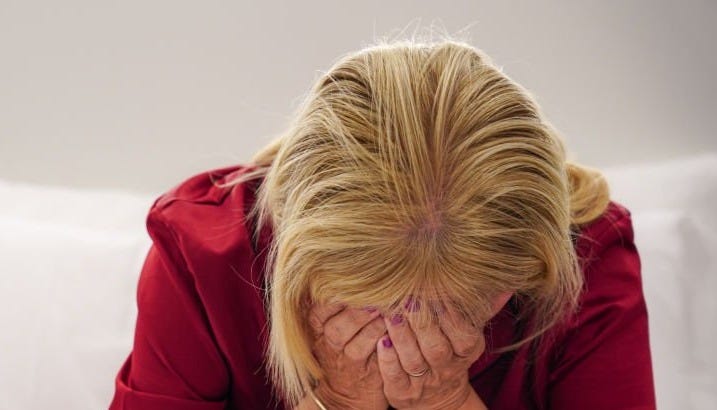
You don’t plan for your marriage to end at 50.
You plan for bathroom remodels, retirement accounts, and grandchildren. You plan vacations you’ll never take and buy the nice towels for guests that never come.
Then one day you’re 50, standing in your kitchen, eating dinner over the sink, signing your name on papers that rename your life.
No one prepares you for the sound your heart makes when the door closes for the last time.
Or for the truth that sometimes there is relief mixed with grief.
I know the sound. My divorce detonated at 46. Two weeks after I walked into grad school to become a therapist.
The affair had been going on for eight months. I forgot the word “attachment” during a presentation and cried in the car on the way home, convinced I was falling apart.
The reality that isn’t printed on pamphlets
Divorce at 50 is not a clean cut. It’s a thousand little separations—bank accounts, passwords, holiday rituals, friend groups, a bed you no longer share, the future you thought you were owed. Your nervous system lives on high alert. You wake at 3 a.m. and do math that never adds up: legal fees, mortgage, college tuition, how-many-years-until-I-can-breathe.
If you’re in perimenopause or menopause, your body is already under construction. The brain fog, the rage, the hot flashes. None of that makes you weak; it makes you human. Put grief on top, and of course, you don’t recognize yourself.
Your hormones didn’t cause the divorce, but they do shape how you experience it.
And then there’s the social narrative: Marriage takes work. Translation: As long as you keep bleeding for it, you’re a good woman.
Here’s my clinical and lived response: If staying requires you to vanish, that's not work. That's not love. That's just erosion with a wedding ring on it.
You may also discover you’re missing the person, but also not wanting that life back.
The shift no one gives you permission to make
In midlife, you are told reinvention is for motivational posters or women with more money, fewer obligations, and a different face.
I believed versions of that lie while working full-time, raising two kids, studying at night, and navigating a body with a short fuse and a long to-do list.
What changed me wasn’t grit; it was a decision: This isn’t happening to me. It’s happening for me.
Not because divorce is a gift wrapped in a lesson. Spare me that platitude. But because pain is information. It tells you where you’ve gone numb. It tells you what parts of you have been outsourced to a role, a last name, an image of a “good wife.”
Divorce at 50 is a brutal audit. And also an invitation.
Clinically, we know the brain is still capable of change. Neuroplasticity isn’t an under-30 perk. You can build new habits, new boundaries, the slow work of becoming yourself again.
The moves don't have to be big. Change the story you tell yourself every time you catch your reflection. Book the financial planner. Stop answering the friend who thinks "forgive and forget" is wisdom.
When a client asks, “Am I selfish for wanting peace?”
I think of the night my daughter asked if I was okay, and I said, “No. But I’m going to be.” Because I wasn't going to show her that loving someone means losing yourself.
Permission you don’t need, but I’ll give you anyway.
You’re allowed to leave a marriage that looks fine on paper and terrible in your body.
You’re allowed to not miss your marriage. Missing the routine is not the same as wanting the life back.
You’re allowed to want sex at 50 or to want none for a while. Desire doesn’t expire, and numbness is often a nervous system response, not a failure.
You’re allowed to rebuild slowly. Fast decisions aren’t proof of strength; regulation is.
You’re allowed to create new holidays and say no to traditions that gut you. Rituals are supposed to hold you, not hold you hostage.
You’re allowed to invest in yourself—therapy, hormone care, coaching, a bedroom that feels like yours. This isn’t indulgence. It’s not selfish. It’s survival.
You stop explaining your choices to people who didn’t have to live inside the choices they’re endorsing. You spend money on yourself like it's not a crime. Fresh flowers on the dining table. A class you've been postponing for three years. Silky sheets with beautiful butterflies and flowers.
And when you date, if you date, you choose from wholeness, not hunger. You stop auditioning. You stop performing “low maintenance.” You ask for what you want out loud. You meet your own eyes in the mirror and say, I’m not negotiating my peace.
The return to the kitchen
Back to the sink, the papers, the nice towels. You will sign the thing that closes the chapter, and it will feel like you’ve failed at a test you didn’t write.
Here's what gets buried under all that shame: you didn't break the marriage. The marriage broke you. You just finally stopped letting it.
Divorce in midlife is not the end of your story. It’s the end of your performance. The woman who emerges is not softer or smaller. She is clearer. She is not “starting from scratch”; she’s starting from experience.
Circle back to the narrative that kept you: marriage takes work. Sure. Rebuilding your nervous system takes work. So does rebuilding your finances, your confidence, your faith in your own voice. But none of it should require you to disappear to get there.
You don’t need my permission
But if you want it, take this and tuck it where you keep your doubts:
You’re allowed to leave. You’re allowed to want more. You’re allowed to start over—at 50, at 57, at any age the world told you not to.
If you’re standing in that kitchen tonight, here’s your next gentle step: write one thing you’re done apologizing for. Then build tomorrow around that truth.
I’ll be here, coffee in hand, telling you the same thing I tell the women in my practice and the woman I was at 50: you’re not late.
You’re right on time.
You knew that woman. The one inside the marriage, inside the role, inside the performance. The Midlife Clarity assessment helps you meet the one who comes next.
I'm wondering how it's different for women who left and for women who were left. I'm the latter.
After 25 years together, my husband said he wanted a divorce days after becoming empty nesters. We have two girls who are 22 and 20. The younger had stage IV high-risk cancer when she was four. The treatment left her with stage 3 kidney disease, legally deaf, infertile, and stunted growth and hair.
After treatment, I should've taken care of myself but that felt selfish. My girls had been through so much. They needed me, so I pushed my mental health aside and told myself I'd take care of it later. Well, by then, it was too late. My husband decided to leave long before he actually did.
I thought I could fix my marriage like I did my daughter's cancer. Just try harder, Amy, I told myself. I blamed myself -- if I were a better mom, I would've know my daughter was sick sooner. A better wife, and I would've been able to control my resentment and tone.
Better...better....better...--- fix, fix, fix.
As women we're sold a bill of goods. Give up our own needs to meet everyone else's and we'll be safe and loved. This is not true but the narrative is so strong. It takes time to call foul. And society doesn't like when we call foul on something that is ESSENTIAL to keeping the system in place.
A 50 year old woman who still has worth? YES WE DO! Since my husband left, I've done so many things I NEVER would've done if he were still around. After an awful divorce, nothing was scary anymore. I just published a piece in Vogue that was so vulnerable. My friend said I shouldn't share on my socials. Judgement be damned!
There's nothing more dangerous than a 50 year old woman with nothing to lose I tell my friends (none of whom are divorced and get so uncomfortable when I start, ha!
Here the Vogue piece if interested:)
https://www.vogue.com/article/separate-bedrooms-marriage-essay
I’m not even in this situation and yet I think this is a powerfully written article. It is one of the best I have read. Kudos. Let’s throw out trad-media and put you in their place. Brava!