
The Beige-ing: The Psychology of Why You Stopped Wearing Colour
You don’t have ‘nothing to wear’. You have nothing the world won’t judge you for.


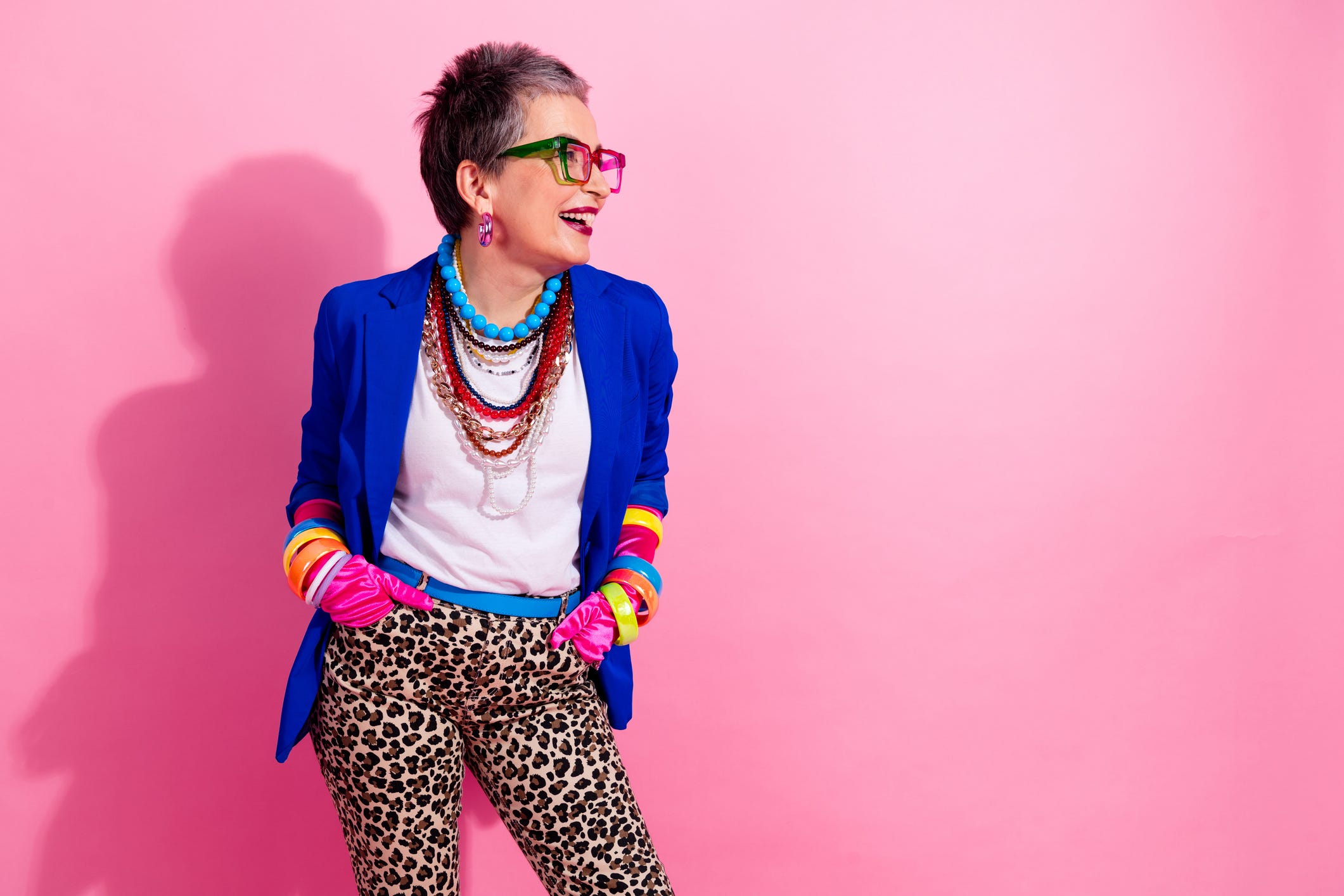
I’m handing the mic to my new friend across the pond, Jen Heinen, a fashion psychologist at The Style MYND Edit. What she does isn’t really just about clothes. It’s about how we’ve been trained, through compliments and beige blazers, to disappear.
She picks up the thread from my last post, women aging into invisibility, and takes it somewhere I didn’t.
And you should read it.
P.S. Jen and I have some exciting news to announce soon!
Guest post by Jennifer Heinen
You are standing in front of your closet. Again.
Staring at the same rotation of neutrals you have been wearing for years.
Black pants. Grey sweater. Beige cardigan. Navy blazer.
And you think: “I have nothing to wear.”
But here’s the thing - you do.
That coral blazer you bought two years ago and wore once. The emerald blouse still tagged in the back. The statement necklace collecting dust. The red lipstick you keep “saving for the right occasion.” (What occasion, exactly? Your own funeral? Wear the lipstick.)
You didn’t stop loving colour. You stopped giving yourself permission to wear it. Because somewhere around 40, the world taught you that glowing isn’t confidence anymore.
It’s “trying too hard.”
And so you dimmed.
Not because you wanted to. Because visibility started to feel dangerous.
Welcome to The Beige-ing
This is what I call The Beige-ing. The silent aesthetic regulation women perform after 40 because the world made it very clear that taking up space past a certain age isn’t welcome.
You didn’t choose neutrals because they suddenly “suit you better.” You chose them because bold felt like a risk you couldn’t afford.
And that is not preference. That is compliance.
Let me be clear: beige itself isn’t the problem.
Beige is a colour. A beautiful one, when it is chosen deliberately.
The problem is that beige has been socially assigned to older women as the “appropriate” choice. There is a reason the term grandma beige still exists - and it’s not a compliment. Beige became the aesthetic equivalent of “stay quiet.” Of “don’t draw attention.” Of “your time for being visible is over.”
When a 25-year-old wears beige, it’s “minimalist” or “chic” or “old-money”.
When a 50-year-old wears it, it is “age-appropriate.”
See the difference?
One is a choice. The other is compliance dressed up as taste.
So no - I’m not telling you to never wear beige.
I’m telling you to notice why you are reaching for it. And whether it is because you love it, or because you have been taught that anything else makes you “too much.”
Why women dim after 40 (and why we pretend it’s a choice)
From a fashion psychology perspective, this shift isn’t about your taste evolving.
It’s about threat assessment.
Colour is loud. Colour draws eyes. Colour announces: I’m here.
And somewhere in your late 30s or early 40s, you started getting feedback. Subtle, but unmistakable feedback. Not even active, often passive, and it signals to you that your visibility was no longer appreciated.
The language is always wrapped carefully (and often unintentional):
● “Age-appropriate” which translates to invisible
● “Elegant” which translates to muted
● “Classic” which translates to safe
● “Refined” which translates to small
What are they really saying? Stop glowing. You are making us uncomfortable.
Research in social psychology shows that women self-regulate their visibility in direct response to social punishment. You were not choosing beige. You were avoiding the comment. The look. The “wow, that is... bold” said like a diagnosis.
Your closet isn’t reflecting your style. It is reflecting your survival strategy.
The silent glow-down (and how it happens without you noticing)
Think about what you have been doing since you crossed that invisible threshold.
Reaching for black when you used to wear red. Choosing “practical” over “powerful.”
Telling yourself bright lipstick is “too much for a Tuesday.” (It’s not. Tuesdays need all the help they can get.)
Leaving statement earrings in the drawer because “where would I even wear those?” (Anywhere. Literally anywhere. The grocery store counts.)
Buying another beige sweater because it’s “versatile.” (It’s invisible. That is different.)
Passing over the dress that makes you feel alive because “it’s a bit young, isn’t it?” (No. Youth doesn’t own joy. Or colour. Or sleeves with volume.)
You have been performing an aesthetic fade-out so gradually you didn’t even notice you were doing it.
Until one day you open your closet and genuinely think:
“When did I become this boring?” or “I don’t know who I am anymore.”
The moment you started listening to a culture that punishes women for being visible past their so-called expiration date.
You didn’t lose your sense of style. You learned to regulate it.
And the world called that maturity.
It wasn’t. It was fucking survival.
So what do you do about it?
That is the question I kept asking myself when I realized I had been dimming for years without noticing.
And the answer isn’t “just wear color" or “just be confident.”
The answer is understanding the mechanism. How aesthetic regulation works, why it feels safer to dim than to risk judgment, and what it actually costs you.
So Jen and I are working on something together to help you unpack this. More soon.
What’s the piece in your closet you can’t bring yourself to wear? The one you bought because you loved it, but never wear because it feels “too much”?
Drop it in the comments. We want to know what you’re not letting yourself wear.
 | A guest post by
|
This is a poem I created to celebrate my 80th birthday. It speaks for itself. My Facebook platform holds my Birthday Odes with photos beginning with my 74th. I'll be creating a new Ode soon as I'm now approaching 81. For sure I'll be wearing my fishnets. Oh JoY
My Ode to 80
At first I had to pinch myself
at best it seemed surreal.
For no one could have told me
exactly how I feel.
Contemplating turning 80
did certainly give me pause.
Given all the negative press
this age is said to cause.
Oh no, no, no, you can't wear that
you're much, much much too old.
Only clothes befitting your advanced age
allows you in the fold.
Regardless of the shape you keep
showing too much skin is wrong.
Bikinis, short shorts, fishnets
all must be gone.
One foot in the grave, a common term,
shriveled up and slow.
Sex no longer an option.
nor is the afterglow.
Speak for yourself I say,
but never speak for me.
I've never followed others' rules
because I'll never agree.
For age is just a number
a given fact of life.
I choose to enter into it
wide open, free of strife.
Every year a new beginning,
bringing wonder and surprise.
Reminding us the awesome blessing,
the gift of being alive.
***
Joan M Bunney
May 8, 2025
Sorry (not sorry ), I’m currently a little drunk, (I know, not acceptable for a woman past a certain age ;-) but fuck that noise. I’m wearing brights and patterns until I die. Iris Apfel is my Broad wet dream. I plan to go into my last act in a blaze of colour and glory, screaming. ‘Woohoo, what a ride’ all the way. No more holding back for this proud 65er!